Showing posts with label Ownership of learning. Show all posts

Friday, December 29, 2017

What Happens When Students Are Designers?

The year always begins with a focus on our classroom community. Trust and value within the community are important to encourage risk-taking and allow students to be engaged in the process of reiteration as Mentioned in my previous post. I try and lead a classroom without compliance where the students take a lead in their learning experiences.

I have been privileged to belong to the Digital Promise Learning Studio (DPLS) community. DPLS provided me with a 3D printer, HP notebooks, and an HP Sprout. Learning studios are equipped with powerful tools and technologies, where students use the techniques of an artist to acquire meaningful knowledge and skills that will serve them and their communities throughout their lives. It is a collaboration between Digital Promise Global, HP, and Microsoft, to reinvent the classroom as a space for learners to design, create, and invent.


The students with the Learning Studios collaborate and engage in activities and projects designed to expose them and enhance their competency in areas including:

  • Empathy and Design Thinking
  • Visual Communication and Design
  • Three Dimensional Design and Modeling
  • Digital Storytelling and Production
  • Social Entrepreneurship

The projects were designed by the students to make a difference in our community. Some students solved problems with the Humane Society and a veterinarian clinic, while others focused on autism. Most of the projects are still in the process of prototypes, using feedback from the users for improvements. The Innovation club of Grade 7 and 8 students teamed up with our retirement home community to design tools to help them with their daily needs.


For all of the projects, students collected data by interviewing both Stephanie Youngdale the Humane Society Coordinator and Dr. Ellis for the IV tool for animals and also by observing the autistic students at the school. Both groups had clients to provide feedback. The Innovation Club regularly visited the retirement home and shared many games that were designed/coded using Scratch and Micro:bit. They built a relationship to observe and design utensils for easy grip.


Please review the projects on this link. To view students' reflections and documentation, please click on the images. The designing process will continue and I will be updating the links on the blog.


The learners have reflected and documented their progress throughout the process. The design learning process focused on conversations through problem-solving. This process allowed learners to value emotions, opinions, perspectives, ideas and authentic self-learning and self-driven thinking. This learning was acquired by giving students the opportunities to empathize with a community for a community.


The learners regularly reflected on their competencies of collaboration, character, and creativity. Creating solutions for problems provided learners with the opportunities to take action of their learning by living the process of design thinking/makers thinking. While designing, learners are creating solutions and making a difference, learners:
  • continue to wonder
  • question to take risks and problem solve 
  •  invent, reinvent and learn together
  •  fail many times to learn
  • are creators of learning 
  • deal with social-emotional impacts on their learning
  • build friendship relationship, independence, social consciousness, compassion, imagination, originality, enthusiasm, passion, sincerity, trustworthiness, generosity and sincereness
How do you get every student involved in thinking and learning?

The students become involved when they embrace the system of innovation and become self-driven and self-creative. Have students create; to adjust their learning and feel the impulse of embracing innovation and creativity. As educators, we should never close our classroom doors on creative opportunities. We become a project facilitator, a collaborator and a co-creator when students are embracing full ownership of the design process. We should reflect on:

  • how are we creating opportunities for ownership of risk-taking for learning?  
  • how are we allowing students to negotiate and socially network their thinking? 
  • how are we allowing emotional problem-solving?
I will share some students' reflections as a conclusion:

"While we created our conception we were very enthusiastic about being able to help out animals with our own ideas, we encountered problems, but we persevered and finished our conception. Our hard work paid off and I am proud of what we made together. I am glad that we have these opportunities to work together and be part of a community."


"To create our ideas, my group and I created our own ideas and took one factor to build onto the other ideas. We were very creative and it showed when we interacted our conception to improve it. We iterated our project four times and every time we fixed more problems we encountered. Our experience will help us improve our critical thinking and collaboration, While also being able to improve our interpersonal work because of what others have taught me. "

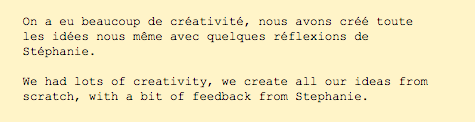
"In my group, we had a lot of open-ended conversations. We discussed all the ideas we had, the pros, the cons, who will do what, who knows how to use Tinkercad, ect. In the end Austin did Tinkercad, but he didn’t know Tinkercad like other people in our group did. That’s just one example of learning how to use tools we didn’t know how to use very well. To find the final model we went through about 4-5 different ideas, each person added to one of those ideas, but they still weren't the best idea we could come up with. I heard “What if I might” or “What if we did this..” a lot. Finding the solution to all the problems took up a lot of time. Then when Stephanie came, she told us more information on what we’re doing and what she’s looking for. "

"During our working process, we worked as a group. We worked as a group while we worked documenting our process. I think my group developed good, thought out ideas because we all know each other well and know that the other people won't judge our ideas. "

"We collaborated efficiently and constantly to create a solution that will help animals. Our solution is a 3D printed model that follow the criteria while enabling us to add our own creative ideas. Our conception has evolved into more advanced designs. We began with a ring with hooks to attach onto the bars, the lip of the bowl would be held up by the ring. My group and I thought of some possible problems though, one of the problems were the size of the bowl, some of them would be too small and would be able for the ring to hold it up and others may be too big and wouldn’t fit. After considerations we decided on making a bowl with hooks instead, then there wouldn’t be a problem with the size of the bowl. "

"I think I’m in accelerating because my group and I were extremely determined to finish the task. We all gave feedback to each other's ideas we had, for example: My first idea to print two connectors, they would snap together. One wound be on the inside and the other on the outside. The bowl would rest in an outline of a circle which is also connected to one of the pieces that snap together, then, you just snap it together and it stays in place. When I presented my idea to the group, I got feedback, good and bad. I got one saying that it would work, I got another saying that it wouldn’t fit because we don’t know the measurements of the bar. My team preserved well because like I said, we gave back feedback and we discussed the pros and cons. "


Monday, April 25, 2016

Students Crafting Their Learning


I finally found the time to reflect about the excitement and learning with the students on MinecraftEdu. The Ottawa Catholic School Board Learning Technology is piloting few licences of MinecraftEdu for next year and thanks for giving me the chance to to be part of the pilot project and it has been a learning journey with the students. Thanks to Learning Technology technician Matthew Murphy for his guidance with the set up.

In the past the students applied Minecraft to Social Studies on a classroom Minecraft account that I have purchased. They built a museum of  aboriginal peoples' adaptations to the environment.

It  has been a learning process that the students have embraced from the Integrative Thinking model to the Designing Thinking process for the mission to Mars.

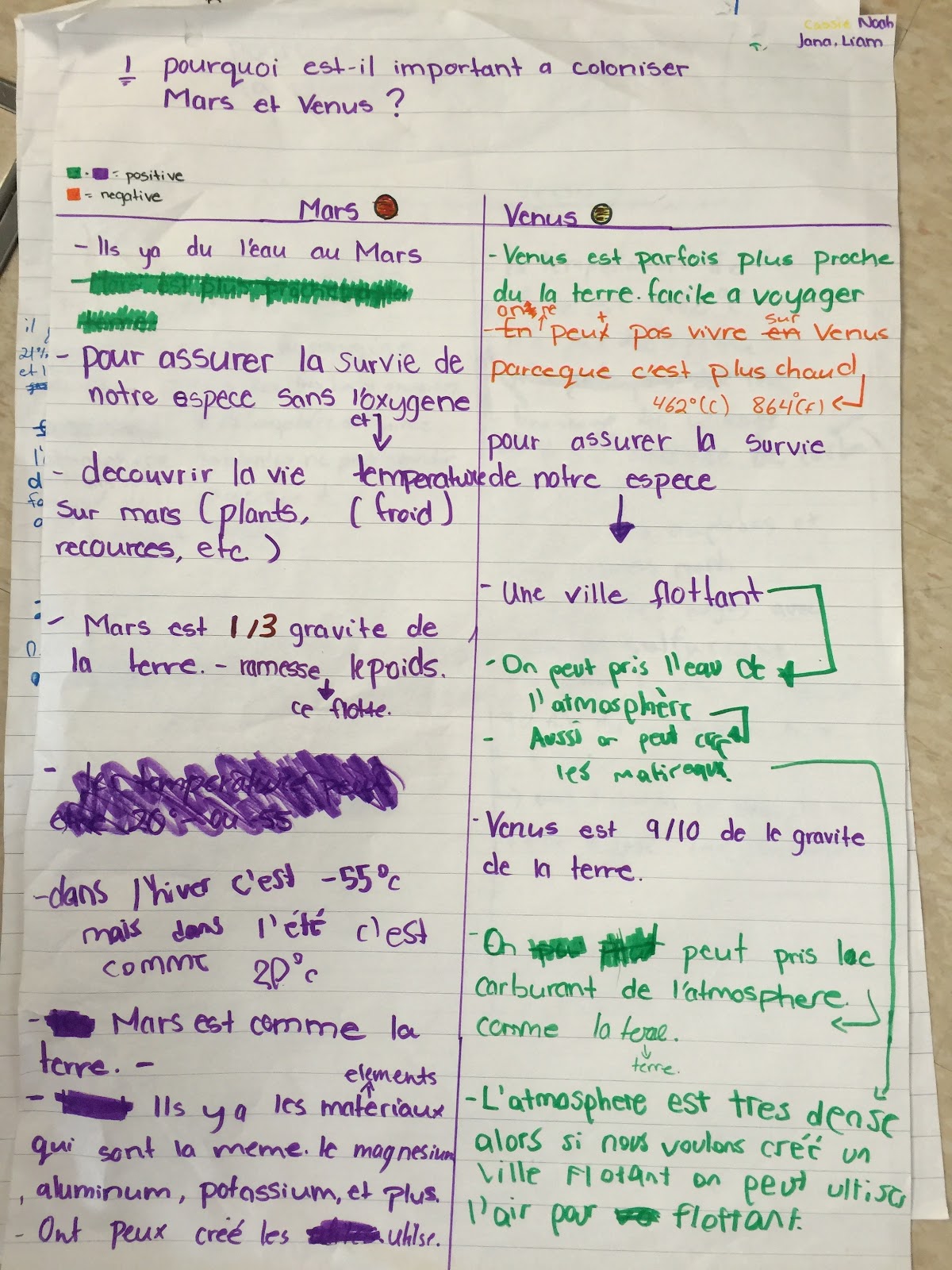
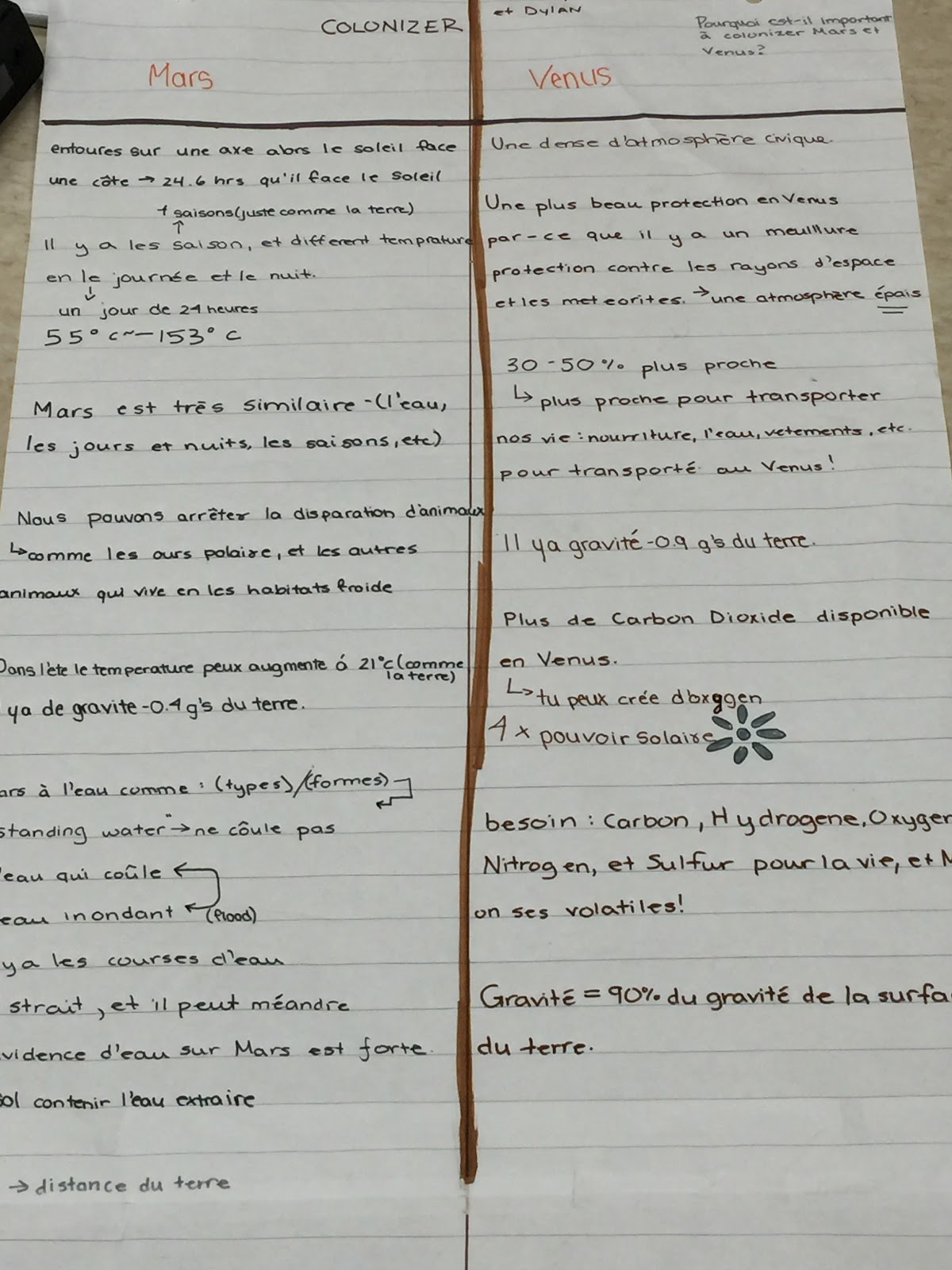
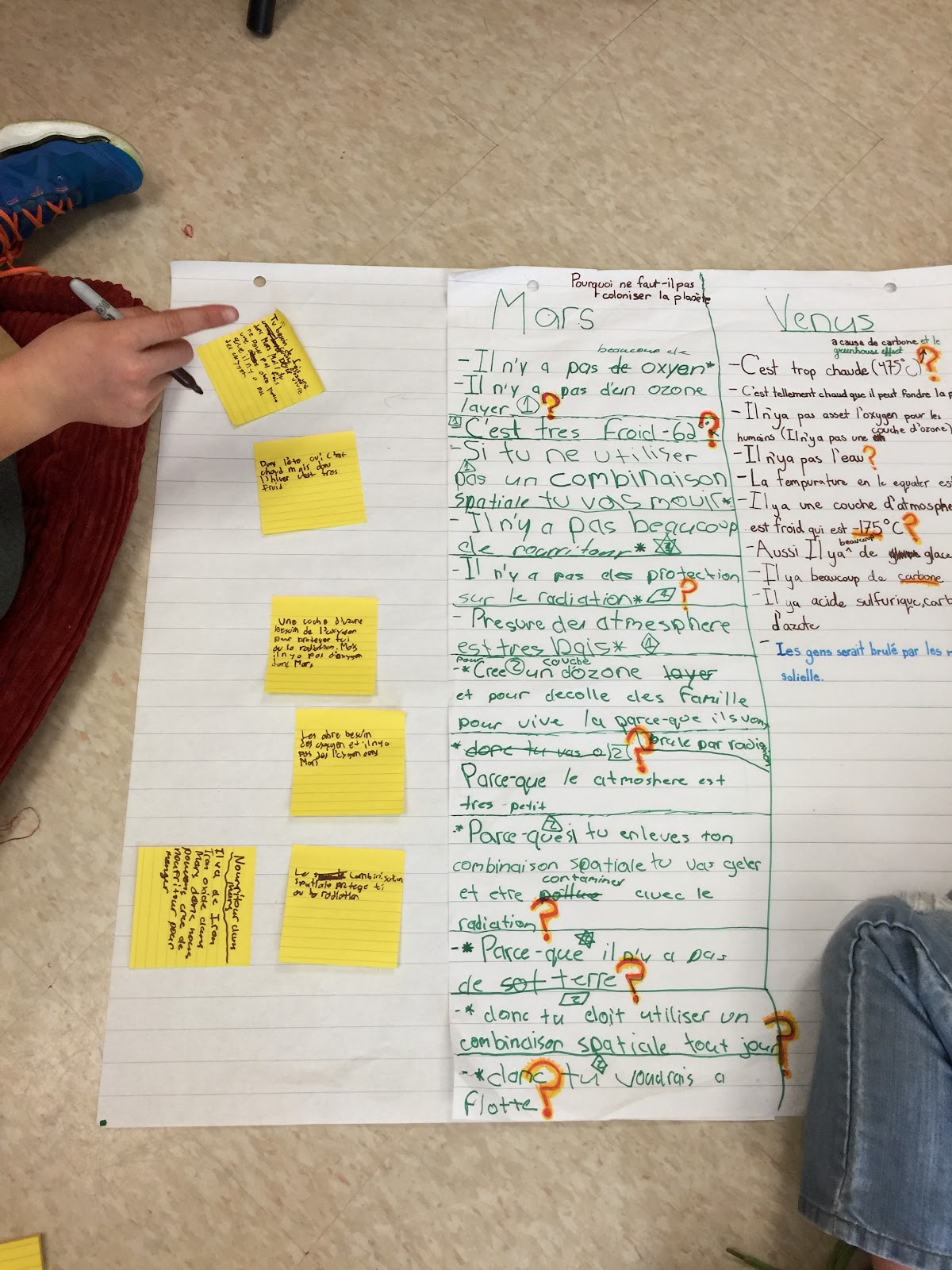
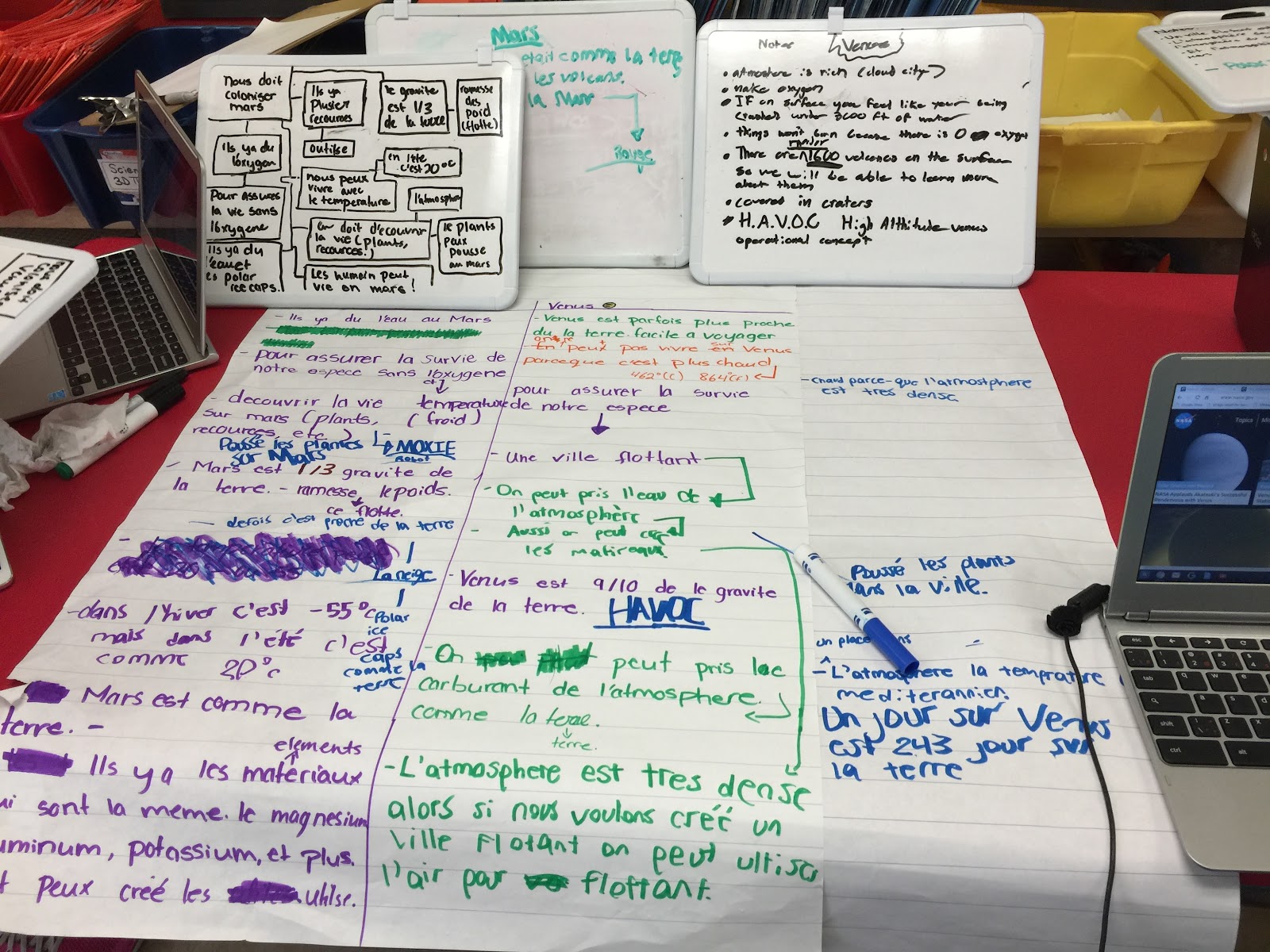
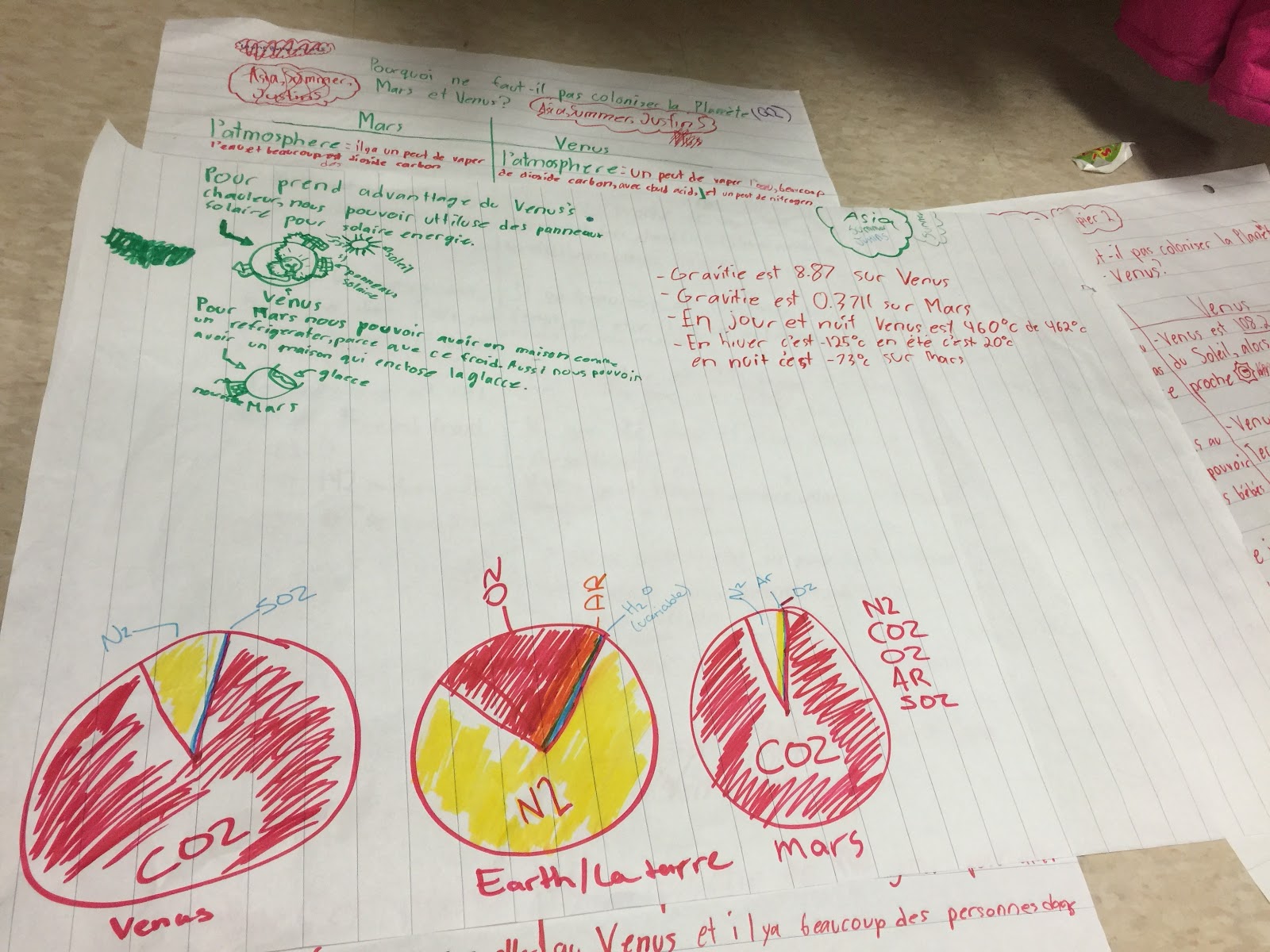
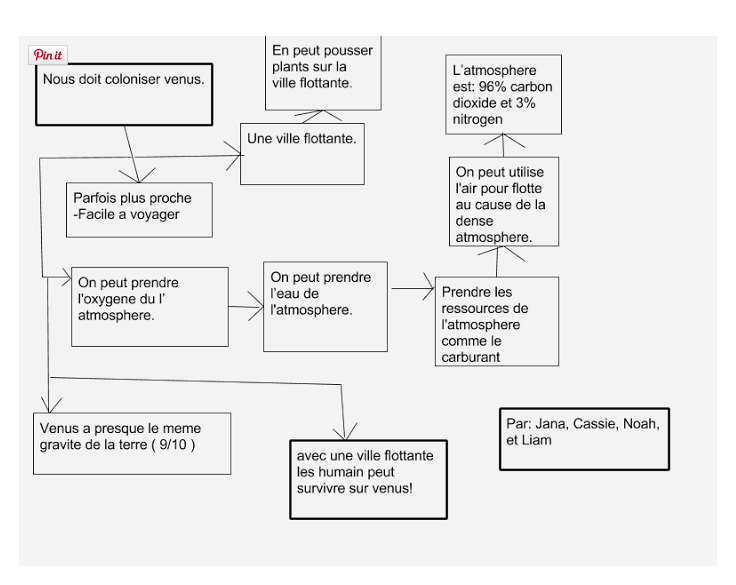
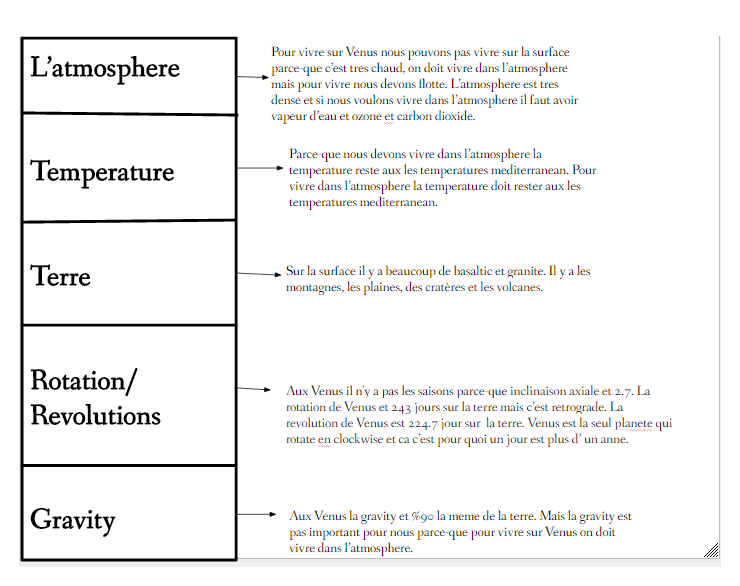
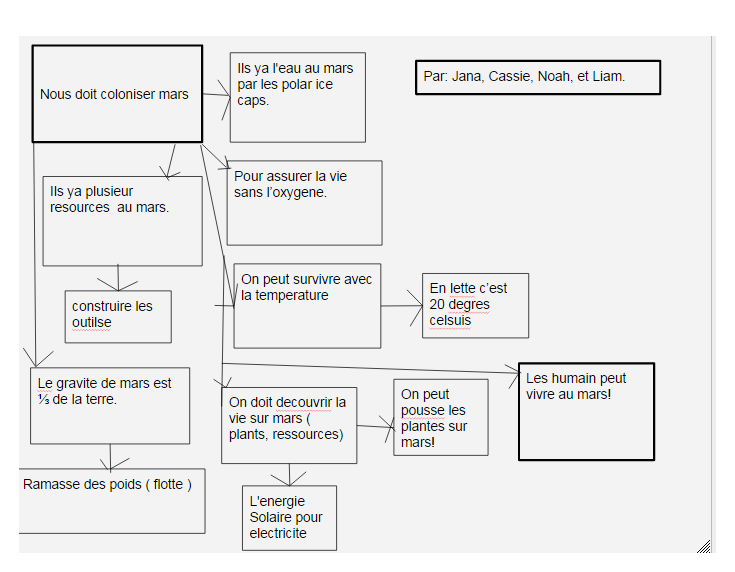
Our inquiry began with the Integrative Thinking process from I-Think Rotman School of the opposing models of colonizing or not colonizing Mars and Venus. This year the students embraced the Integrative Thinking process, the causal model and the Prop Pro models that enabled them to dive into complex issues and tensions that enriched and embraced the students learning skills. Through the Integrative Thinking process, the students interact to become creators of their own thoughts by collectively building ways of understanding.

The students were provoked with so many current events about space from NASA daily news, SpaceX achievements to Ted Talks about colonizing planets, Learning from Chris Hadfield videos and of course the ISS missions.

Throughout the process the students unpacked self lead inquiries about the planets and space as well as looking at multiple stakeholders for colonizing from citizens, scientists and governments.

The students began by defining the compositions of the planet through the Pro Pro Model of colonizing or not colonizing Mars and Venus:


The students continued to persevere, problem solve and build knowledge by creating new ideas and articulating the models by focusing on the perspectives of citizens scientists and governments. Many students continued during recess by further thinking and problem solving their inquiries. 


This video is from a Periscope live broadcasting


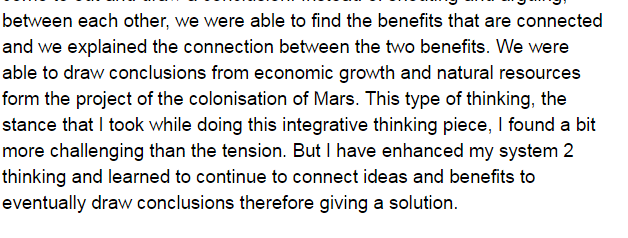
The Students reflected on the models by thinking about the benefits that are connected to colonizing and not colonizing the planets and described those connections. 
 

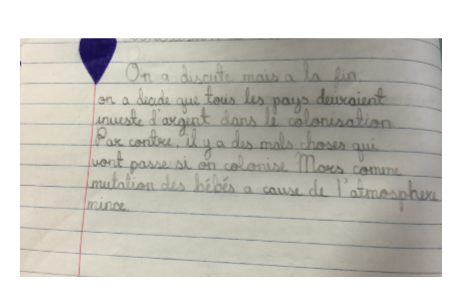
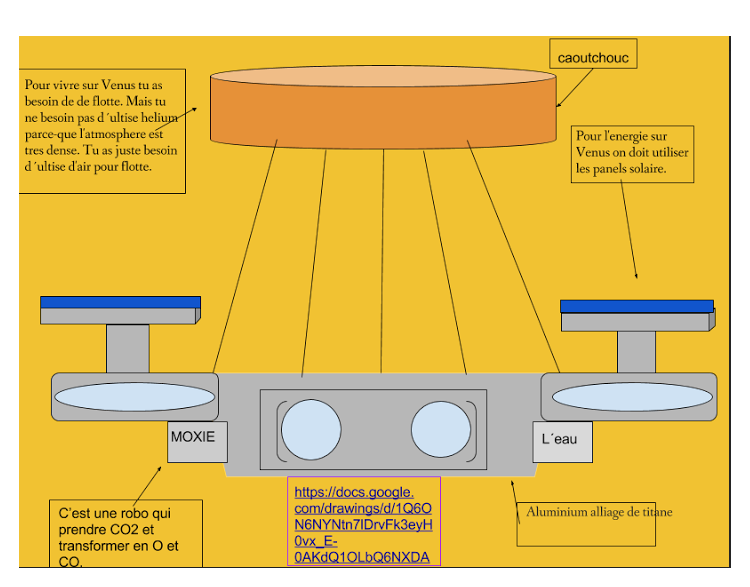
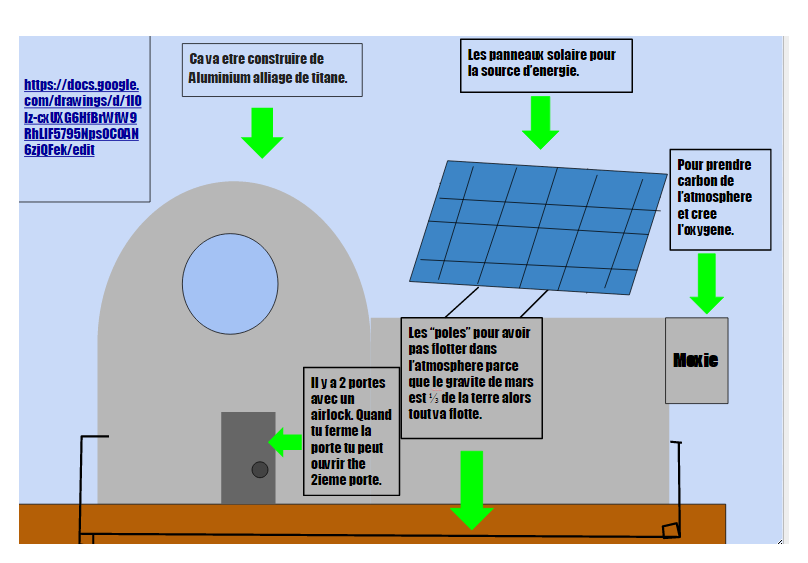
The students came to the understanding that economic growth and natural resources are always key for decision making in  colonising both worlds. Beginning a new world on the planets, where all countries agreed on the growth and development with no historical confrontations. The students proceeded by designing and imagining what the colonies would resemble on Venus and Mars.


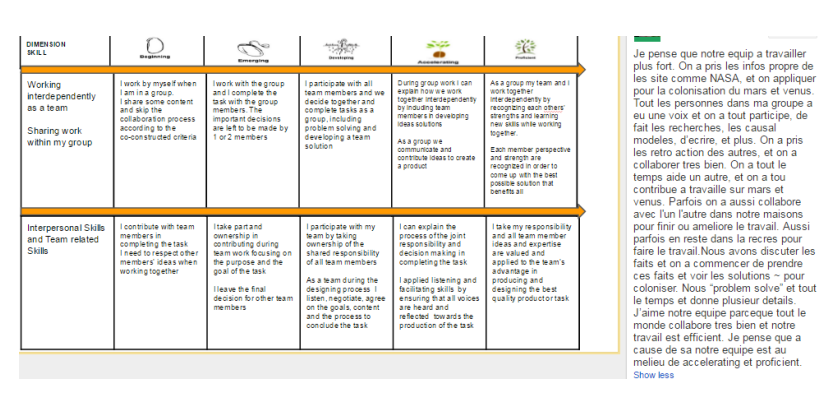
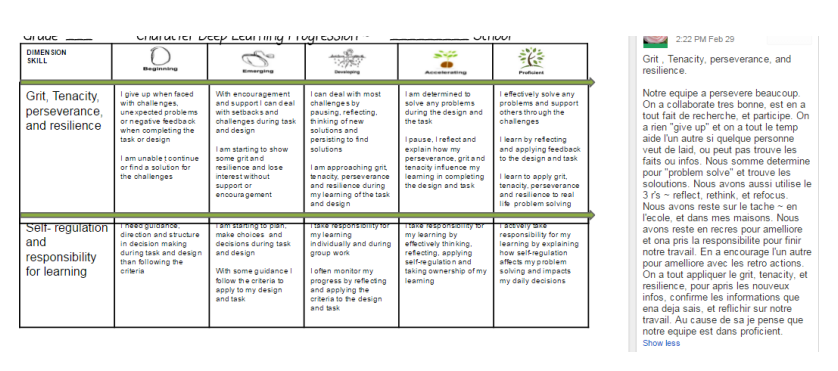
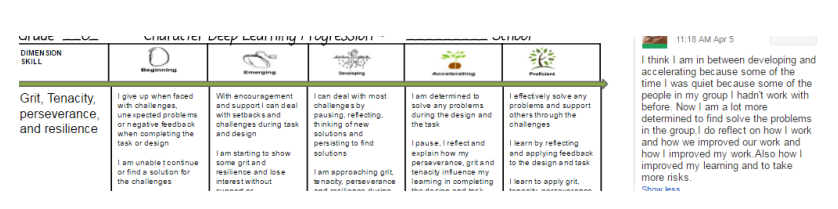
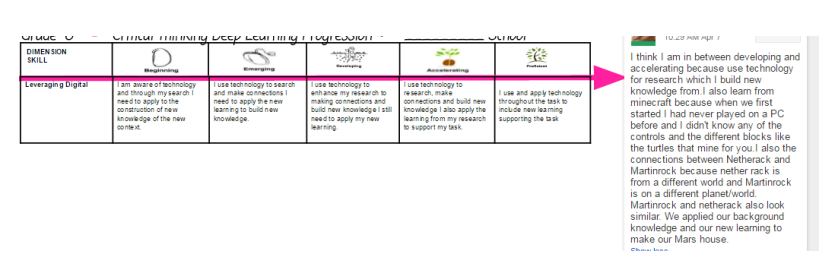
During the process the students continued reflecting on the competencies and certain dimensions.

Collaboratiom

Character


Critical Thinking


From the Integrative Thinking we moved on to the Design Thinking process on MinecraftEdu  imagining and creating the structures of Mars by keeping in mind the conditions on the planet.

Again throughout the designing, creating  and planning process of Minecraft the students reflected on the skills that were being applied and acquired during the process.


We used free trial of Camtasia for students to capture their learning to explain how and the choice of blocks that they have used. This is an English version of a house structure on Mars.


Learning is not about teaching, it is about acquiring skills while students are experiencing and constructing their process of building knowledge, problem solving, creating and iterating ideas to design models in which they take full ownership of thinking and creating.

When students are crafting their learning it is not the learning of facts it is training each other to think through tensions of cognitive complexity.

Some questions to reflect on when students are crafting their learning:

How, as an educator am I giving them the chance to interact and develop skills and become the expertize of their own learning?

We are still looking for a professional feedback about our structures. I am hoping to contact CSA for feedback or if you know of anyone please let us know.

We found an astronomer through Virtual Research On Call to meet with students on-line and give feedback about the structures on Mars. Thanks to Ms. Pauline Barmby for taking the time and meeting with most of the groups. Each group was able to share, explain and take advice regarding the structures for colonisations in relation to Mars conditions.


A student's reflection about the feedback of the structure on Mars. 

Tuesday, March 17, 2015

Are Students Communicating?


There is always a great value of strong practices with the students by always unpacking the skills. The students have co-constructed criteria of many skills from collaboration, self-regulation, responsibility, organization, initiative to independent work.  The achievement chart from the Growing Success Document  is to be used by all Ontario teachers as a framework within which to assess and evaluate student achievement of the expectations in the particular subject or discipline.

The Grade 5 and 6 students have been unpacking skills The 6 C's of NPDL by Micheal Fullan. Thanks to Karen McEvoy who is the consultant leading New Pedagogies For Deep Learning and  many school teams have been introduced to the process.

I have recently built and continue to build with my students the awareness of , what is communication? How can a students communicate effectively in a variety of styles, modes and tools could be outlined for different audiences and purposes?

 Through many opportunities students explored, recognized  and reflected about the dimensions of learning progressions on Communication skills from New Pedagogies for Deep Learning. During learning tasks, as a facilitator I have to be careful not to over scaffold the thinking.  I have to give students room for ownership for processing and responding. The communication skills are in real time through co-constructive ideas in which students continually in a conversation are: examining, inferring, predicting, analyzing patterns and relationships, solving problems, allowing students to own their ideas. The partnership in conversations become interesting and valuing each others ideas. The key is to reflect on the progressions throughout the learning tasks and giving students a chance to value their learning through the skills. Below are some examples of learning tasks that guided their progressions. 

The studentsè began with  powerful conversations by unpacking the science concepts of Grades 5 and 6 curriculum on electricity and matter by using MindMup Google App.


The Grade 5 and 6 students consolidated about the team conversations. The students identified that during their conversations they were analyzing the information by using mind mapping as the tool and producing communication of connected ideas from the team members. They also identified that communication is a design of many modes from oral, visual to written.  The majority of the self reflections were at emerging as students were starting to establish and follow communication protocols of working together. As students progressed through reflections on communication the following designs were identified: 

  • Making sense of the communication, elaborating, clarifying, questioning, building on, challenging aprtnerès ideas, roles for groups member for an effective communication 
  • Producing many modes through many tools of communicating,
  • Communicating to evidence that connects to audiences and concepts (Multidisciplinary), staying relevant
  • Monitoring, managing reflecting by improving the challenges (behaviors, attitudes)


The students began reflecting by using Google forms. They were given time in class to reflect on the communication skills and continue reviewing the developments of the progression to learn the process and to improve communication. I tried to videotape students during the process and reflect on how to improve. I have combined several videos below of the process through many learning activities from exploring the Arctic Giant map in relation to Science and Social Studies and everyday learning experiences and opportunities at school. 

The following videos describe the tasks:


Looking at students self -reflections summaries off the forms this is what students said:

  • Listening more and asking more questions
  • Communication better with my peers and sharing more in class
  • listening and giving chance for others to speak. 
  • By sharing more of my evidence 
  • Making connections when communicating for understanding.
  • Express my learning in many choices
  • To always think about the audience
  • Respect the others by having roles, note taking, questioning, valuing each others' thinking, interpreting 
  • Building vocabulary 
  • Improving my French
  • I changed to improve by speaking more during class and getting included/participating with activities
  • They've made an impact on my learning in french,because I have gotten better at my Grammar
  • I have improved on listening more and asking questions that I need to. It has helped me share ideas or questions.

  • I improved my oral french by focusing on the dimensions of communication, I engaged in conversations and practiced it. I also improved my writing by focusing on the dimensions of communication, by writing on task of the subject and by listening and learning to improve. And finally, I improved my listening by focusing on the dimensions of communication, by looking at the person who is talking and asking questions to clarify the question.
    The communication competencies have made an impact on my learning. For example, it has improved my oral french. Secondly, it has improved my writing. And lastly, it has improved my listening.
  • I have changed by being more interactive with my group members while discussions and by talking and putting my ideas out there. I am comfortable because my group members agree with my ideas and because  I am usually familiar with the topic.
  • The communication competencies have made an impact on my learning because, I will have background knowledge before conquering a individual/independent project. It also made me understand more french in a way, and it gives me the initiative to do something by myself.

  • It has helped me realize what I do in class and why I do well in school, and continue to do well. It is because I have been being more respectful, and helping. You have been guiding most of this way. You have showed my many cool things that I probably would not have known about without you. 
  • I have reflected on what in my group works and what does not,to improve my communication with my team, audience and more.For example with my group we all,including me choose the roles which would match each of our particular communication skills we are good at.If at the start we just choose random roles we liked,but as we got to know each other we changed the roles accordingly to improve.
  • It has helped me improve my communication as a team player,explain or give a message and more.They have helped the receiver of my message to understand and have connection with the message I have gave to "stick" in there mind.

The students will continue reflecting and building on communication progressions. I will continue to reflect on How am I engaging and motivating students to foster communication skills?

Sunday, February 15, 2015

Youtube For Visible Thinking

The Ottawa Catholic School Board provides all students with Google accounts. Grade 5 and Grade 6 students have amplified their learning by using YouTube for explaining science inquiries.In a previous post A Collage Of Learning students integrated the arts as well to explain their learning.

The focus of this blog post is to share the process of using YouTube for visible learning and thinking.
After researching, reading, analyzing the text and determining important facts in relation to their inquiry of  the science expectations, the students organized their information in a graphic organizer focusing on synthesizing the information.


  1. Uploading images on Google Photo Slides.

2. Students could choose slide duration, slide effect, and transition.


3.  Video is uploaded to Youtube to add annotation from the reading organizer.


4. Enhancing video for slow motion for reading annotations.


5. The students also added a video from Youtube for further discussions by using Spotlight. More  focusing is needed  to make sure the spotlight is visible and to add a comment where to click and when to start the video link as well  opening  in a new window.


6. A screencastify of a student's collection of evidence on the eportfolio.


7. The students also used video notes to reflect on their drama video  presentations while focusing on the criteria. I was able to add comments as notes as well.


Grade 6 students used YouTube video slides and annotation to explain the biodiversity of Canadian animals and to analyse the positive and negative human impacts.  The extra step that the Grade 6 students added was using the Snagit images about the classification of the animal in their photo slides.


Technology has amplified students' voices by emphasizing on the evidence of their learning in line with the co-constructed criteria, curriculum expectations through video slides and annotations on YouTube. The students' voice was also evident by reflecting through video notes about their drama presentations. We will be posting all of the cross-curricular evidence on a Thinglink for access to all about the visual art, drama and explaining human systems for Grade 5 and biodiversity for Grade 6. Technology is important for students' voice to strengthen their learning experiences and their importance of being at the centre of learning. Through technology the process of learning becomes visible to capture students' experiences. I continue to reflect: how can students' voices and thinking be evident for all?