Showing posts with label Social Emotional Reflections. Show all posts

Sunday, February 17, 2019

Changing The Narrative Together!


Every academic year is different as students lead their learning and use their emotional journey through everyday learning experiences. Each year, I have to shift my pedagogical practice to build a respectful, collaborative, risk-taking, caring, compassionate and empathetic community. In my previous years, I have blogged about unpacking of the Unlearning to create a community that values perspectives for knowledge building and action taking.


This is my second year in Grade 7. I continue to explore the adolescent social-emotional learning of autonomy and agency of their learning. Their learning is being impacted by using creative tasks, focusing on why learning matters and what is next. The narrative of pedagogical practices shifts as I learn from the student’s needs, their reflections and how they learn.


We began exploring what thinking errors and biases we bring during collaboration. The team's collaboration requires trusting to share intrapersonal ideas, valuing all others interpersonal ideas to build knowledge, inquire, analyze, research and build connections for next steps.  Through the metacognitive process, we built a community of trust, risk-taking, valuing all perspectives, persevering with curiosity to guide students interest and care for their learning.


The year unfolded as students reflected about their thinking errors and biases that prevented them from collaborating and valuing each others thinking. We focused on perspectives and trusting themselves to share without worrying about being judged. We also focused on contributing with respect as well as respecting others.


We needed to:
  • Be active listeners
  • Be collaborators with a growth mindset
  • Develop communication skills
  • Have positive attitudes
  • Be reflective learners
  • Be receptive to feedback
  • Understand how we learn
  • Determine learning strategies
  • Believe in making a difference

On a daily basis, we collected thinking errors on sticky notes focusing on how their emotional learning to collaborate and accept feedback from others was affected. Through the ladder of inference (Rotman I-Think), the students were able to interpret their data and come up to a conclusion for their next steps.


From September to November we had many documentations and reflections. The students also had the first conversation with me that was recorded and shared with parents about their process of learning skills and how they have improved and their next steps.


Throughout the process, we began focusing on self-regulation and self-management of learning. The focus was on finding strategies about the learning process and environmental strategies to guide autonomy and agency on self-regulation and self-management.  During a professional development day, our principal Mr. Sean Kelly shared the Understanding Learning Disabilities From York Region District School Board. The flow chart became an essential guide for my students to reflect on their learning and their next steps on individual perspectives about their learning process. The students developed their individual plans by collecting data, reflecting on self-regulation and the self-management of learning success.


More reflections about individual learning strategies:


It has been an amazing journey of reflecting and learning about competencies, learning strategies and building a respective and compassionate community towards learning and caring about each other. I will share more reflections about students' transformation of learning:


The process of a compassionate interdependent classroom takes time to have students collect data and reflect on how and why they are learning. With my scheduling, I am fortunate to be able to make time for reflections with the students to determine the next steps. We already had three documented individual meetings about success and how they have been achieved and their next steps. We continue to develop on, who am I and how I learn? The students will be learning about the brain and its functions and how the prefrontal cortex continues to develop especially with peer pressure.

I have so much more to explore and learn with my students on social-emotional development. We have success by using thinking models that embrace risk-taking and competencies as well as design thinking tasks that focus on problem-solving and empathy.

Pedagogical practices are always shifting and meeting students needs with the focus on emotional and intellectual practices. It is important to take time and have students take the responsibility to collect data and reflect on their learning process and how it is affecting their actions towards intellectual and social growth.

How are we building capacity for learning? How are we changing our narrative of pedagogical practices with our students?
  • Reflecting on biases and assumptions
  • Are students aware of their emotional learning?
  • Are they reflecting on self-regulation?
  • Are they finding tools to guide their learning strategies?
  • Are students being active communicators and listeners?


Monday, July 9, 2018

Cultivating Own Giftedness

I continue to be inspired by my students as we take risks and innovate together.  We evolve to change together while focusing on competencies based learning, risk-taking, personalizing inquiries, proceeding with uncertainties and embracing many challenges that lead us to learn thinking skills and transform our learning.

From September to January the students explored guided design thinking inquiries. Previous blog posts describe the process.  The purpose from February to June was for the students to independently lead and develop their design thinking inquiries on sustainable structures based on Global Goal #11 Sustainable Cities and Communities.

Goal 11 Sustainable Cities and Communities

The students innovated and created their design thinking process and entrepreneurial process. It is also the marriage of the curriculum on structures through personalized inquiries to develop competencies, leadership, and entrepreneurial creative mindset. Every team of students pursued their own leadership, responsibility for searching, creating sustainable purpose and partnership with experts or having an end user for feedback.

Learning is more than just exposure to content it is for students to arouse in their own inquiries. It is the independent connection of the curriculum with students skills and to cultivate their own giftedness and identify their self-development of their personal leadership when collaborating and finding out of what they are capable of doing.

I am sharing two classes that pursued sustainability on structures.  One class, I worked with two blocks a day and another class I saw once a day.

The learners who I saw twice a day decided to define their own sustainable structures.  The following self-lead inquiries were persevered by the students:
  • Three teams focused on the classroom flexible seating
  • A group on proper recycling of the school bins
  • Another on a scientific solution for decomposing and recycling plastics
  • Two students tackled a city problem of the Prince of Wales bridge
  • A team focused on electric cars for the city of Ottawa Police
Throughout the year and during the discovery about structures the students were provoked through current events locally and globally. This is so important to always open up the classroom to real local and global events. The presentation includes some samples of students process.


The learners who I saw only once a day for Science and Social Studies, all completed designing their own hydroponics structures for sustainability. The project developed from geography on natural resources and water with the problem in Cape Town disaster of zero water.  Thanks to the Ottawa Catholic School Board for enriching and personalizing teachers' learning by providing experiential learning fund. The Science department approved the funding for this project, all materials and electronics were covered.

The video captures the process from provoking to the designing.


More of the students evidence of the process from planning to the science and reflecting on the 6C's.


The process had many layers in which students guided their own decisions. Not only the design thinking process, also thinking models from Rotman I-Think like the Causal Model, the Pro Pro model and the Ladder of Inference to come up with better solutions or unpack the causes and factors as well as interpreting the collected evidence of the process and the data from the end user. The process is never linear, many teams ideated their ideas in order to be realistic for taking actions and creating prototypes. The following are the specifics of the process:
  • Defining the problem - Why is it important to pursue? 
  • Developing the empathy map- Who are they empathizing with, why and how meaningful is it?
  • Steps to achieve it-from research, to contacting experts, the necessary technology for use
  • Actions of how to achieve it, from determining the how and the time to achieve it, also getting feedback from an end user. 
The full planning process was student-driven, from the thinking strategies to the creation and feedback. Design thinking is about solving problems from defining and understanding the problems around the students. What really matters is allowing students to act on creative solutions like a designer with a purpose, inspiring and imagining new solutions by iterating what exists and solving how to make it applicable.

Having the students lead their own designing process is giving them the opportunity to be optimistic about creating for the future and that it is possible to implement change. The importance throughout the year and through their current experiences with designing is giving them the experience of not always getting it right the first time. This is critical thinking and creativity is giving students the space and ownership of always questioning, assessing and rethinking for learning. Why do we always supply the students with what we think they need than allowing them to explore? The students need to know why they need to learn and how could they approach the learning.

Learning is connecting through designing and creating. We should not leave a gap in taking action within the curriculum.  The students unpack their literacy, science, math and the arts when they are creating. As teachers, we are mentors at transferring the curriculum better. For the students to be successful we need to give them a chance to grow and be successful, not to get it right at the first time; that learning is prototyping. How many things could go wrong? That is important too! Not be fearful of mistakes when things don't work. Learning is about continually designing and not approving or disapproving, it is continuous. We need to move from the mindset of approving and disapproving and adapt to the mindset of being optimistic by implementing not to be perfect all the time.

How are we orienting continuous learning? How do we allow problems solving?
We have to carve the space to suspend the perfection and look for the feedback.

Our students tell us a lot about our teaching. We need to believe in ourselves and keep on trying. I always love students reflections throughout the year about our learning space. I have learned so much this year with the support from the leadership team and working with a great team of colleagues.

Are we constraining students from opportunities for creativity when we are just ensuring to just get through the curriculum and testing? How are they cultivating their own giftedness?

Monday, March 13, 2017

Shifts In Learning

My learners and I continue to shift our learning and evolve through competencies for authentic learning connections. We continue to experiment with learning, reflect on and iterate the learning in order to embrace the winding road of rich learning practices. Shifts in learning involve learning to happen with the students, being engaged with them, sharing and reflecting during the process in order to allow the shift and the depth in the learning.


As mentioned in previous blog posts learning practices embrace clear purposes, success criteria, feedback from the teacher and peers, and opportunities to self-assess and have students determine their own progress and success. (My previous post on reflecting)


Reflecting continues to pave the way to deepen our daily experiences. There is no linear learning or planning. Our learning is always based on how we are going to demonstrate thinking and having content as an equal partner with cognition for my instructional practices and for the students' learning outcomes. In this blog, I am going to focus on the latest learning experiences and unpack our shifts in our learning. These learning experiences are many opportunities to also pique students' curiosities.


The students are reflecting on their own growth on a daily basis. The competencies are also explored and highlighted during the process. The students focus on how the learning experiences develop their growth and next steps through competencies. When I am planning the learning experiences, I am also referring to the competencies.


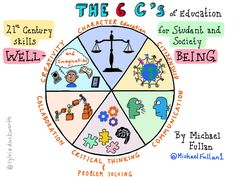
Our school board, the Ottawa Catholic School board has been building experiences of competencies with their schools for the past three years based on Michael Fullen Pedagogies for Deep Learning.


As I catch up to my reflections on our shift in the learning process, at this time my learners are becoming more comfortable with being uncomfortable and are capable to independently refer to their habits as they are applying and reflecting on the competencies for learning. (Post on the Unlearning) The students are thinking with flexibility and paying attention to details when reflecting on real world experiences and audiences.


Connecting to real world learning through the Global Goals For Sustainable Development in relation to Grade 6 Social Studies Curriculum of Canadian Interaction With The Global Community has lead to the process of explorations that began in January through the visual arts and drama as students still continue to investigate local, national and international events.


The learning shift for the students has been done by becoming open minded while focusing on social justice, political and economic impacts to the environment. When reflecting on these experiences they are rendering to real world accountability.


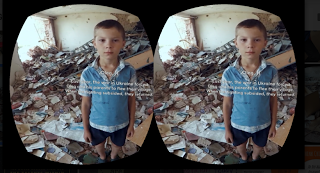
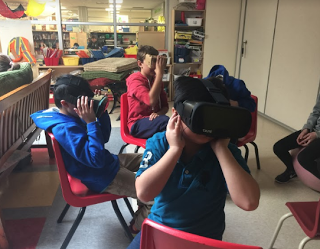
After watching 360o videos of Virtual Reality about the "The Displaced from NYTVR, which it could be viewed on 360o videos on Youtube.


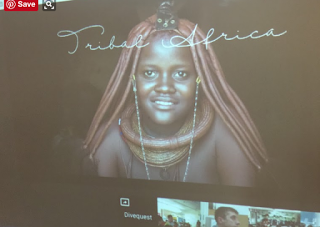
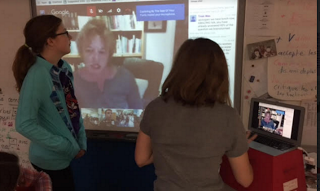
We were lucky to also have a camera spot on Exploring By The Seat of Your Pants with Inger VanDyke who captures images from tribal Africa. This was an interesting hangout for the students as they reflected on how happy these cultures are and how immersed they are with their simple daily life expectations.


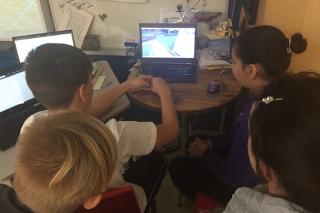
Students interacting with the presenter and documenting their new learnings.


We also followed up on events by reading, listening and viewing many links online from our local, National and international news on xenophobia, human rights, Children rights and twitter from United Nations and UNICEF.  

Of course the exposure to many perspectives and contexts matter. This blog focuses on students' reflections and their journey to further explore empathy by observing, listening and sharing their thinking during class discussions. The students are reflecting on their own growth by being concerned for the planet and relating their learning to social, economic, political and environmental impacts of all human actions. I am amazed by students' reflections and their courage of being authentic to their emotions and embrace the shift of learning about themselves.


The pre and post reflections focused on Citizenship, "thinking like global citizens, considering global issues on a deep understanding of diverse values with genuine interest in engaging with others to solve complex problems that impact human and environmental sustainability." (Fullan &Scott 2016 p.6)


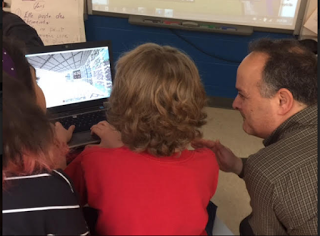
The students have taken action on environment sustainability while exploring the production of energy. They have designed and built sustainable cities on Minecraft with zero emission and they partnered with Natural Resources Canada with Mr. Meli Stylianou for feedback about zero emission housing and with Dr. Marianne Hatzopoulo for urban sustainable cities. I should have blogged and shared students' thinking of the process of environmental sustainability. I will share some evidence.


Mr. Meli met with all groups on their sustainable housing.


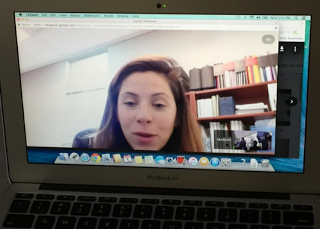
Dr. Marianne Hatzopoulou offered feedback online with all teams about their mine craft samples of sustainable cities and infrastructures.


As students focus on global issues, as to which they are presently planning to take action with Students Who Teach the Sustainable Development Goals. They have begun their designs of informing their local and global community and hopefully, I will be able to share their process of design.


Below are some images of the Grade 6 reflective shift and expressions of where they are now with their thinking about global issues, global perspectives, diverse values and understanding their place in local, national and global life. The reflections are written in French and I will be translating them.


I am proud of how my learners are progressing with their emotions and sharing how they are moving forward by thinking about the future and how it is real and it impacts everyone. The process of reflection about the Citizenship competency has allowed them to accept where they are at, how to move forward, embrace change and emotional exposures to other people's experiences, needs, and concerns from global, local and national events. They have become listeners, observers, curious, caring and sincere to understand than approaching people with a mindset.


The classroom is the beginning for the learners to explore and invite open-minded curiosities about diverse world values and views. The students will continue to make these global connections, differentiating facts, thinking critically and taking their learning deeper. They will continue to reflect, express their self-awareness and think how to impact others through social change.


How are your students reflecting on the change of their feelings and emotions towards real world problems?