Sunday, July 27, 2014

Propelling Curiosity!

 It is important to provoke students' learning for curriculum inquiries in many exciting and innovative ways. It could be artifacts, videos, current event news, objects, interviews, wordles, pictures and even from a story book.  As teachers we always have to bring reality into the the inquiry process to connect real life experiences into everyday learning.

There are multiple ways of  propelling curriculum curiosity in class and inviting students to spark and ignite in questions that they never seem wanting to stop learning, sharing and collaborating that conversations become an ongoing vehicle of exploring and developing ownership of learning.  It is so exciting to see students push each others thinking and learning by questioning, seeking, pursuing, confirming, convincing, comparing their ongoing development of thinking and reflecting in depth on their learning.

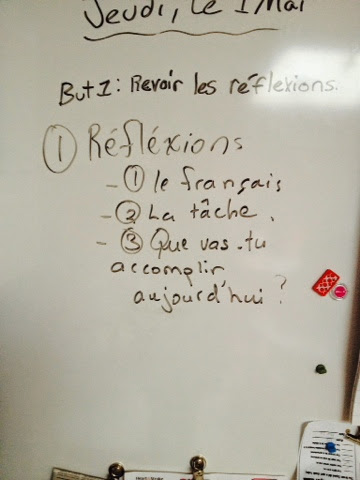
Of course along the way students co-construct criteria not only for the purpose of reading, writing and speaking, also for the learning skills. These foci of strategies that overlap and extend thinking as well as learning skills (responsibility, self-regulation, collaboration, independence, organization and initiative) that loop and promote metacognition and reflection on learning. Reflecting (at the end and the beginning of the day) on learning, is what drives our thinking throughout the process and determines next steps and learning goals. It is explained in this post on Metacognitive Discussions.

The focus of this post, is to share some examples that created opportunities for thinking and provoking curiosity leading students in ownership of learning.  During this process, I become a mentor, a listener, an observer and an activator while students developed their curiosities. Students' questions always lead the inquiry process. Provoking focuses on students' questions, which is a very important step in letting them engage and take leadership and ownership of the process. The process is carried on with categorizing of the the questions then comparing them to the overall expectations of the curriculum.

These questions are a routine in activating conversations:

1- What do think is going on? Background knowledge
2- What makes you think this? Students support background knowledge and share the how and the why of their knowledge before searching to confirm and proceed to new learning. It is very import to give students this opportunity of building on each other's background knowledge and engage in conversations to pursue thinking and inquiries.  I love this stage as it solidifies their dependence of learning from each other then it provokes more thinking and further questioning actions and new inquiries through discussions. This is a very important step to takeby encourage listening, speaking and respecting other opinions and knowledge for further clarification of concepts.
 3- What would you wonder about? (After their discussions). What new learning are you wondering about? Throughout the year students develop searching skills, annotation for reading and choose ways to share new learning.

It takes time to immerse students in skills by providing exciting learning opportunities.We spend time building skills at the beginning of the year which become the core for our success and reflecting on these actions during the process to improve accountability.

There is so Much to share I will post some and every year I keep focusing on getting better at capturing the process through blogging. Some of the process captured on the Classroom Blog by the students  We focus on French daily that typing the process in English lags a little.

I seek the subject related examples off the news and social media.  Some examples of Science and Social Studies for provoking curriculum inquiries:


Science


Gr 6 


Ottawa's Great Forest  Before our walk to Beaver Pond

newfoundland-labrador/seal-product-ban-upheld-on-ethical-grounds-

canada/north/northerners-slam-wto-seal-products-decision-

Social Studies:
Gr 6
infographics-on-nelson-mandela  classroom Blog post about Mandela

snowden-docs-show-u-s-spied-during-G20-in-toronto-

it-wouldn-t-be-b-c-without-em-harper-jokes-about-vancouver-protesters

http://www.statsilk.com/maps/world-stats-open-data

If the-world-of-100 villages

-ottawa-canadiens-sotchi-mise-en-garde.

Nestle 'to act over child labour in cocoa industry' For Gr 5 on refugee and citizenship

Indian's exploited child cotton workers For Gr 5 on refugee and citizenship

etats-unis-malala-yousafzai-inspire- Gr 6 & 5


Gr 5
-confederation-line Ottawa’s world-class light rail

Justin-trudeau-removes-senators-from-liberal-caucus-

Comment organiser une cérémonie de citoyenneté


An example of students contribution after deconstructing the curriculum expectations:


Provoking learning does matter for curriculum inquiries. Students become so engaged with daily issues that themselves will continue searching and sharing realistic examples in everyday life experiences. What will you do to provoke your students curiosity this coming year? 

Tuesday, July 1, 2014

SWAT Team! How to search?

 The SWAT team, Students With Advanced Technology my Gr 6 and 5 students implemented technology with teachers, students and parents.  They created a site and a Google Calendar for booking.


They have explained many apps ( pic-collage, iMovie, Green screen, fotobabble, Audio Boo...) and Google Docs, GAPPS.


The students have covered many skills and applications for capturing the learning process through tech tools in class. It is important in class to give and allow time for students to explore how to use the tool, learn and reflect on how tools are useful for capturing learning.  These skills are important for students during production to minimize time and focus on the learning process than the tool itself. 

The SWAT team also prepared series of videos on Google searching. The students have uploaded some videos by Screen Capturing the search skills using Snagit. I have uploaded some videos from the Snagit Library on YouTube to share effective research for students by students. 


Three videos that I was unable to embed from YouTube of Ottawa Catholic Board Google account- advanced setting was the same as others. Time to use only ocsb for blogging.
Videos tips on


More on the SWAT Team SWAT team during Education Week


Sunday, June 1, 2014

Metacognitive discussions on determining learning goals!


I am sharing the process of metacognitive learning by determining individual learning goals and classroom learning goals.  This process is the base of a valuable connective platform of reflective conversational classroom community encouraging thinking, communication in learning and being clear about what students have accomplished and what needs to be accomplished.

On a daily basis students are given opportunities to engage in reflections in their learning and determining their next steps. The individual goals are shared with their teams, this collaborative thinking promotes questioning, ownership of learning, clarification of any content misconceptions and students converse about their goal setting of inquiry learning and next steps. This process makes learning transparent and it solidifies the classroom as a learning culture based on what individuals have learned and will reach. 

Using one chrome book per team students share their daily documented learning on Google Calenders that is embedded in their sites. As mentioned in previous posts Google is our Learning Platform for all activities. 

This connection also takes place face to face and digitally by inviting their colleagues to reply on next steps during learning tasks. They embrace each others' learning by having students voice on how to meet goals and share learning skills and strategies.  This creates a nurturing social, transparent and intellectual culture of learners committed by caring about each other's learning. 

The following are samples of connective learning:

Teams gather to listen, react and learn about reflective learning goals. 


Student on site sharing her reflective learning.


Students' reflections on Google Calender


We have le "professeur du jour" determining our whole group goals.


Not all reflections are digital some students to choose to write them on a daily basis 


I wished I had Google glasses as I always miss capturing many rich students ownership moment. I might invest in a pair this summer! 

All this learning is also articulated in French not only they are reflecting on their learning that is written in French also enriching their oral French through conversations. Students take risks in a second language and respect all entry levels of learning. Through this process as parents and students admit not only they have learned skills, strategies and content from each other, it has also improved their oral and written French. Through rich conversations on goal setting students take full ownership of learning during their tasks.  I will soon be posting more examples of oral rich conversations learning tasks. 

 We need to provide students with these reflective opportunities online, in writing and  face to face to constantly expose perspective of learning through an engaging community.


Students' partnership in learning!

As teachers we all look for partnership to grow professionally with colleagues and connecting with professionals on social media. I have always appreciated many blogs and tweets that make me reflect on many pedagogical learning experiences.

As mentioned in several posts on voice, inquiry and the ownership of learning, all credits are given to students for their partnership in learning. I was reading Aviva Dunsinger's post on Celebrating Learning  addressing students showcasing their work and how students are amazing teachers when given the choice. In recognition of #AboutThekids and catching up to my reflective blogging this post is dedicated to my teachers of Grade 6 and Grade 5/6 who make me celebrate and reflect on a daily basis.

I am sharing an example that took place with the whole school where students were to lead learning. The reason I am sharing this learning activity  is to demonstrate that every opportunity in class or out of class should always be  reflected on with students, by focusing on learning skills and how learning skills are always applied to any situations.

Students had an opportunity for a day mentoring the primary students through Math activities organized by Mathletes.  As students were mentoring, I had them reflect on their experiences on the classroom Twitter account. I have gathered their responses and videos of the day on a padlet. I am unable to share the live link as the videos are of many students from all grades.


All students' reflective tweets during the Math stations are the exact reflections that makes a classroom a learning space. 

The tweets were about:
  •  The importance of collaboration when teaching and learning
  •   Positive feedback during activities
  •  Motivating students by giving them a hint or a question to provoke their thinking.
  •  Learning the Math content with the other students while teaching and explaining
  •  Learning is fun when students are talking
  •   Lots of fun when students were engaged with learning
  •  Students listened and persevered when they were challenged
  •  Students were accountable at completing their tasks and never gave up
  •  Learning through games is motivating.


 Students' reflection mirrored what happens in the classroom and how important to always take advantage of all learning situations and reflect to improve learning skills. I enjoy watching students every year take full ownership and responsibility of learning and perseverance to inquire for learning and share their learning. Teachers who regularly visit my classroom or see my students in action at school or out of school wonder, how do we do it! It is about reflective learning on a daily basis by focusing on learning skills and actions taken to master tasks through skills.  


Sunday, March 16, 2014

Why we love Google!

We rely on Google for everyday's learning experiences! From planning to capturing thinking, learning as well as sharing and reflecting. I have applied Snagit Screen sharing to explain the importance of Google  in our everyday classroom applications. My eduwin of the week! Many tools, extensions and add ons are applied to our everyday learning, from youtube, Padlet, Snagit, Google drawings,Google  presentation, forms and documents. I am sharing some videos applying Snagit Screen sharing.

This video explains how I use Google sites for sharing links, housing students sites that are eportfolios for capturing learning and reflecting.


An amazing interactive wall: Padlet


Google presentations for transparent plans shared with students and parents. 


We use Google forms for checking for understanding by adding images and videos. 


I have used doctopus and had trouble with the scripting. I have not used yet flubaroo as I do not give quizzes;  I need to find a good use for it like checking for understanding. We will be applying many add ons.


Love the way Google keeps on synchronizing many tools and making learning accessible and visible . Many more Google tools will be shared and I will updating the blog regularly.


Students are using Kaizena  to self-assess and provide evidence of learning.  I also use kaizena to provide feedback written and oral about the student's evidence.


Thursday, March 13, 2014

Why should students experience the real creation process?


Lat year my students enjoyed curiosity blocks and  I was to continue exploring this year and learn more about how students apply their skills to tasks of their own choice.  

This year with my English partner Carolyn Brambles and I decided to dedicate a block of 100 minutes a week not tied into the curriculum or teacher lead, only students lead curiosity of their choice on Fridays.

Students were in situations where they had to make decisions, problem solve and judge on what and how to create in any format, based on their own curiosity. The students and us struggled at the beginning into making sense of the process and how could this accountability becomes a reflective learning situation for all of us. 


Students ideas form the first curiosity camp. 

We used the same method as Educamp where students would write what they would like to learn, explore and what they could offer. We also provoked students' interest by watching Caine's arcade and Be more dog video- open to take risks. 

Through regular reflections the students and us improved.


First reflection form that lead to more understanding of the process. 

Who would think having students to decide to create was a large task!  We thought that students would tackle it easily. At the first camp, students could not make up their mind as to what they wanted to pursue as they were busy constantly checking what others were doing and changing their mind as they walked around the room.Once they decided what they would like to pursue and started formulating a plan monitoring the next steps and putting the plan into action, they started generating possibilities. They were formulating plans and the ideas were connecting and students were being strategic by conversing,reflecting and problem solving with each other.

The first attempts were not a failure rather a learning experience. By our third camp  the skills and strategies fell into place with their planning. Students pursued in accomplishing their desired task with a partner or individually. Students were experiencing many skills like; self regulation, creating, planning, conversing, reflecting, problem solving, integrating technology for researching as well as explaining or just recording the process online on a Google Doc or in a notebook. .

In the true sense of real learning experiences and full ownership of the learning process that they have explored and that they were immersed in.  Some students were programming games with Scratch , some students were playing and designing with Minecrat. Others were knitting, some designing origami and rainbow loom bracelets or key chains, headbands and animals. Some students were exploring Vietnamese style of painting as well. The amazing part of the whole block was the thinking and the reflective conversations during the tasks. 

Students among themselves were defining the importance of creation by proceeding with the skills and the strategies while completing the tasks of their creations.  


The second reflective form that students' completed focused on skills and strategies.


We need to give students a chance to experience and apply the skills and the strategies that they explore in class and be able to connect them to their choice of curiosity. Through this exploration students could create their own curriculum of their choice. You could call it genius hour or the 20% project like Google employee, giving students the freedom to pursue and be responsible for their curiosity with their own purpose of learning. How can we continue to spark students' passion?


Some  pictures and vine videos of their experiences.


Updated reflections after March Break: Students voices about the importance of skills to accomplish plans: So much learning from Students' reflections about giving them ownership of independent curiosity. 

Planning from the previous camps was important because then you will manage everything better.

J'ai appris que avant Curiosity Camp avoir un activite pour les autres peuvent apprendre. Ne pense pas que quelques va apporter un chose que tu veux d'apprendre, apporte ton activite.


I have learned that planning before Curiosity Camp helps with getting organized on the day of the camp, and it moves things along.

I think if you manage your time wisely, you can get ALOT more work done, so you wouldn't have to worry about it last minute.

I learned that if you manage time well then you will know when your game is great and you don't have to rush.

Organizing is important because you have things in right order and you know what'll happen next and what to DO next.

If your not organized you can't find your stuff that you need and everything is messy you need to be prepared. So then you know what to do.


I learned that taking/demonstrating initiative is important because that shows leadership.

By demonstrating initiative you can come up with great ideas and keep others on task. Also by taking initiative you and your team with feel like you got alot of work done.


i have learned that you should not change your goal even if it is hard try to do it.


That if you set goals you will achieve them and a good goal should be measurable. Goals need to have associated behaviors. There is a word for a goal without an associated behavior. It’s called a wish. For example I want to hold a handstand for 60 seconds. That is what I learned about goal setting.


I've learned that if you set a goal, you can achieve it by working hard and never giving up so you can reach the goal, you'll be happy at the end :)


Goal setting is so important during curiosity camp, and everywhere else because you won't know what you've accomplished unless you set a goal, and be proud when you accomplish it.


You have to be specific on what your goal is and you have to improve yourself to accomplish your goal.


I learned that if you have a plan it is easy to take initiative because you already know your goal and you don't need to be told what to do. Also if you take initiative then you can achieve your task.


Some vines of the Play4change Day


Monday, March 10, 2014

From Today's Learning to Tomorrow's Learning Goals!

As mentioned in every post my learning is based on the pedagogic reflections  from my students. If I am expecting the students to reflect and determine their next steps: then I should be too!

We have used Google calendars for the past three years as our reflective learning journal. These journals determine today's learning to tomorrow's learning goal.

I will be sharing an example of the process that I find effective in bridging students' reflections for setting our daily learning goals. This alignment provides insights of where we are and where we would need to go next; students are also aware of the end of the journey and the expectations. I find this process crucial in giving students responsibility and ownership in having them determine what needs to be accomplished and any adjustments that we would need to establish along the way. It aligns content, purpose, goals and skills required to get to the end of the task. This process also provides ideas on students' insight and confirming what needs to be accomplished and how.  It is also a way for checking on students' achievements and capabilities of rethinking about what they have learned and how.

 By sharing these reflections students also clarify any content misconceptions during group discussions; as students speak to evidence from the web or real world issues to clarify their reflective learning. The reflections turn into team discussions by reviewing their individual goals that trickles into more thinking when reflecting together about tasks and confirming or revisiting the process before pursuing the tasks. This process also highlights the learner's thinking  and pursues to develop required skills during tasks .

I will be sharing a recent project that students completed about Bangladesh and problems of employment  in the textiles industries. The task was based on Social Studies and the focus was to explain causes and effects in the industries and  employment in developing countries, analyzing and applying the learning through imrpov. Many skills and concepts were to be developed by the students to complete the task.

Google Calendars are a journal of reflections on students' eportfolios about their learning.

 Task #1 Kevin's reflection after a high school presentation from All Saints about imrpov. In his reflections he describes what is improv on what he observed.


 #1 "Bridging students' reflections for setting our daily learning goals."


Through Kevin's details and other students' reflections, students began co-constructing the criteria of an improv:
An example of the first attempt on the criteria of improv:


Students build their background knowledge through listening to a report on CBC Banglades -affrontements-travailleurs-textile.  and  reading an article relating to Social Studies about the impact of global social, economic and political issues (Social studies B2 overall expectations). Students apply annotations during reading for determining main ideas of causes and effects to the problem. Expectation are clear and application of French oral language as well as passé composé  .


This is a sample of our consolidation about the process and purpose of the improv. 

"Where we are and where we would need to go next; students are also aware of the end of the journey and the expectations."


Haley's reflection speak to what has been completed after reading and first attempt of the improv. 


Another example of :

#2 "Bridging students' reflections for setting our daily learning goals."

Bridging the reflection of the reading and past tense into actions for the task. 

Through Cedric's reflections about the past tense he is also explaining the application of his learning with his classmates. Full ownership of learning!


Emma's reflections explain the imrpov and the French oral application.


#3  "Bridging students' reflections for setting our daily learning goals."

The process continued as students video taped the first improv and reflected on next steps and added the next steps to the criteria. 


    Task #4 "Bridging students' reflections for setting our daily learning goals."

This learning reflection is about the first attempt on improv and team sharing their next steps on a shared Google doc 

This next reflection speaks to: "I find this process crucial in giving students responsibility and ownership in having them determine what needs to be accomplished, any adjustments that we would need to establish along the way. It aligns content, purpose, goals and skills required to get to the end of the task. "


This reflection is from Isabelle, in which she shares links from CBC about the textile economy and reports about the fire and collapsing of factories.

Evidence of the process on a students' eporfolio: 


If we need to focus on a process of ownership of learning and responsibility then we would have to embrace a process that is student centered based students' learning experiences to inform instructions and plans for next steps. The learning process is a system of interdependence embracing many learning opportunities in a learning environment that embraces reflective daily implementations that centers on students' growth.